Parasha Noach
One righteous man, a world destroyed and renewed, and a covenant with all of humanity.
Overview
Parasha Noach is the most directly relevant Torah portion for Noahides. It tells the story of Noah — the one man found righteous in a generation consumed by violence and corruption — and the covenant God made with him and all of humanity after the Flood.
The Story
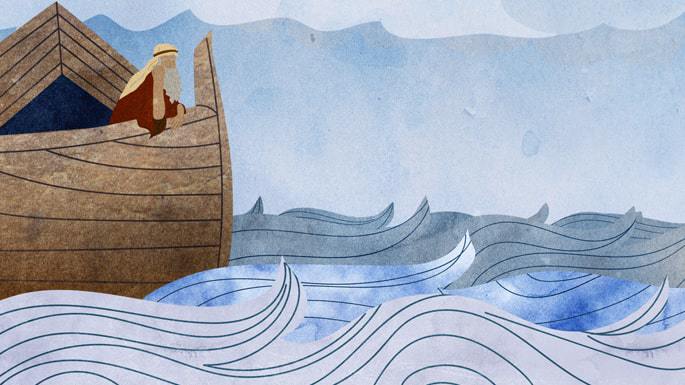
God sees that the earth is filled with violence and corruption. He tells Noah to build an ark and bring his family and representatives of every animal species aboard. The Flood comes and covers the entire earth for forty days and forty nights. Every living thing outside the ark perishes. After the waters recede, Noah sends out a raven and then a dove to test the land. The dove returns with an olive branch — a symbol of peace that endures to this day. Noah and his family emerge from the ark. He builds an altar and offers sacrifices to God. God makes a covenant: He will never again destroy the world by flood. He sets a rainbow in the sky as the eternal sign of this promise. God gives Noah permission to eat meat — but prohibits eating a limb torn from a living animal, and reaffirms the prohibition of murder. The parasha ends with the Tower of Babel — humanity's attempt to build a tower to the heavens in defiance of God. God confounds their language and scatters them across the earth.
Significance for Noahides
This parasha is the direct source of the Seven Noahide Laws. It is here that God formally establishes His covenant with all of humanity. The rainbow is the sign of that covenant, and the laws given to Noah are its terms. To be a Noahide is to be a child of Noah's covenant.
"I have set My rainbow in the clouds, and it will be the sign of the covenant between Me and the earth." — Genesis 9:13